Posted by Chuck Iker on 3rd Nov 2025
Bonsai Pot Selection
Choosing the Right Bonsai Pot – More Than Rules and Ratios
I am often asked which bonsai pot pairs best with a particular tree. I’m always happy to help, but I also know my answers sometimes feel vague. As a potter and artist, I genuinely want you to own a pot that speaks to you. But as a bonsai potter, I also know that choosing the right vessel involves more than simply liking how it looks. The goal is always to create harmony between tree and pot.
So what’s the formula? You’ll find endless “rules,” ratios, and tidy charts defining pot selection. They’re useful, but they don’t tell the whole story.
First Impressions Matter
When I match a tree to a pot, I start very simply—with that first glance, the immediate impact of the composition. Just like in painting, we work to guide the viewer’s eye. A strong composition makes an instant statement. It feels balanced, harmonious, and emotional.
If your eye jumps immediately to the pot, perhaps it’s overpowering the tree. If the tree feels too dominant, the landscape feels unsettled. Neither should overwhelm the other. They should support a single vision and work together.
Taste, Experience, and a Little Freedom
We all bring different levels of experience and personal taste to bonsai. My honest “potter’s opinion” is this: if you love your composition, that is what matters most. It’s your tree, your expression, your joy.
That said, if you enter shows or competitions, you step into a different world—one where judges evaluate based on established conventions. There are expectations and traditions, and yes, a bit of structure. A bonsai planted in a football helmet or bedpan probably won’t be taken very seriously… although for the record, I have made everything from skulls to bones for clients, and I applaud that creativity. The rebel in me smiles every time.
Rules Have a Place—But They Aren’t Everything
Books on bonsai mention pot selection, but rarely in depth. The internet offers far more guidance, including the common standards: pot proportions, trunk thickness relationships, style-to-shape guidelines, and more. These are good principles. They help lead you toward balance.
But for me, fixating on rules misses the point. If you focus on composition, emotion, and the story your bonsai tells, many of those rules naturally fall into place.
Let the Landscape Guide You
Bonsai reflects nature in miniature. A broom style tree might echo a gentle hillside landscape, surrounded by meadow and soft grasses. That image calls for a pot that feels natural, subtle, and quiet in design and color.
A tree marked with jin or shari suggests lightning, wind, survival, and raw strength. That image demands a pot with presence—something rugged, earthy, perhaps unglazed, that adds to the drama rather than softens it. Alpine survivors clinging to life on cliff edges should live in pots that feel equally primal and weathered.
Work with the landscape you’re trying to evoke. Place the tree in its “native” world. The right pot should help transport the viewer there.
Inspiration Is Everywhere
Most of us keep folders full of bonsai images we admire, along with examples of great pots. I also recommend keeping photos of trees in nature—interesting shapes, windswept silhouettes, ancient giants on mountainsides. These are incredible sources of inspiration. Many of my favorite vacation photos are simply trees I couldn’t walk past without stopping.
Nature teaches composition better than any rule list ever could.
Color, Texture, and the Final Test
Nature gives us the best color combinations. Look to the environment your bonsai represents—rock, sand, forest floor, alpine stone, meadow, coastline. That will guide glaze, surface, and form choices.
And yes… after all this, I still won’t give you a strict checklist. Because part of bonsai’s magic is in the search, the evolution, the quiet moment when tree and pot suddenly belong together. That’s art.
So here’s my final test:
Does it make you smile?
Do you pause every time you walk past it?
Does it bring you joy?
If so—then it’s perfect. Even if it is a football helmet.
A Final Thought
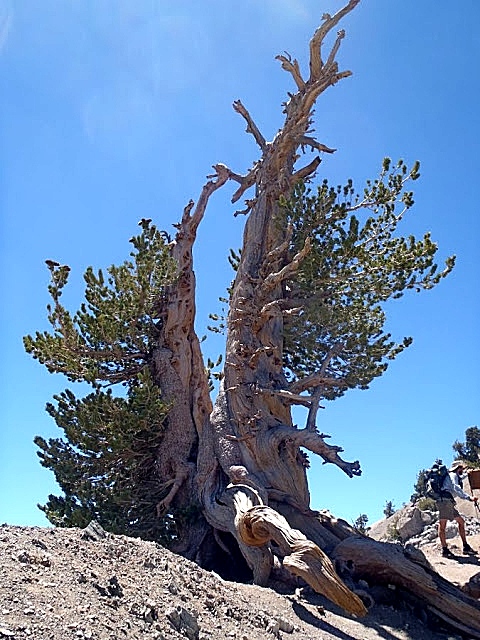
The photo below was taken by my son during his 2,600-mile hike of the Pacific Crest Trail in 2011. These ancient trees, shaped by unrelenting wind and weather, tell stories centuries old. There are no smooth lines. No gentle curves. Only the raw emotion of survival and strength.
If you were to create this tree in bonsai, the pot choice becomes obvious. It must carry that same emotional weight. That’s what great pairings do—they complete the story.